
Thoracic rotation is the technical term for twisting and turning the middle of your back. This part of your back allows you to twist your torso, whether for day-to-day activities or sport-specific movements.
The thoracic spine involves 12 vertebrae situated between your cervical spine (your neck) and your lumbar spine (your lower back).
If you do not have good thoracic spine rotation, you may notice stiffness and pain in your back, shoulders, or neck.
Let’s go over some ways you can improve your thoracic rotation and mobility.
Exercises for Thoracic Rotation
Here are a few exercises that are good for anyone who wants to improve their thoracic rotation. These exercises will help with daily activities and movements:
Thread the Needle: In the tabletop position, make sure your hands are directly underneath your shoulders and your knees are directly underneath your hips. Push one arm with the hand facing up under the opposite shoulder, placing the shoulder on the ground and relax. Hold for a second, then open up your chest and reach towards the ceiling with your arms in a straight line.
Open Books: Start by laying down on your side making sure your knees and ankles are stacked on top of one another. Lay on your shoulder, put your arms directly out in front of you with your hands stacked. Rotate your torso so the back of the hand touches the ground on the opposite side. Return to the starting position.
Let’s look at a few sport-specific exercises that can help with thoracic rotation. These movements can assist athletes who play sports like golf, baseball, or tennis.
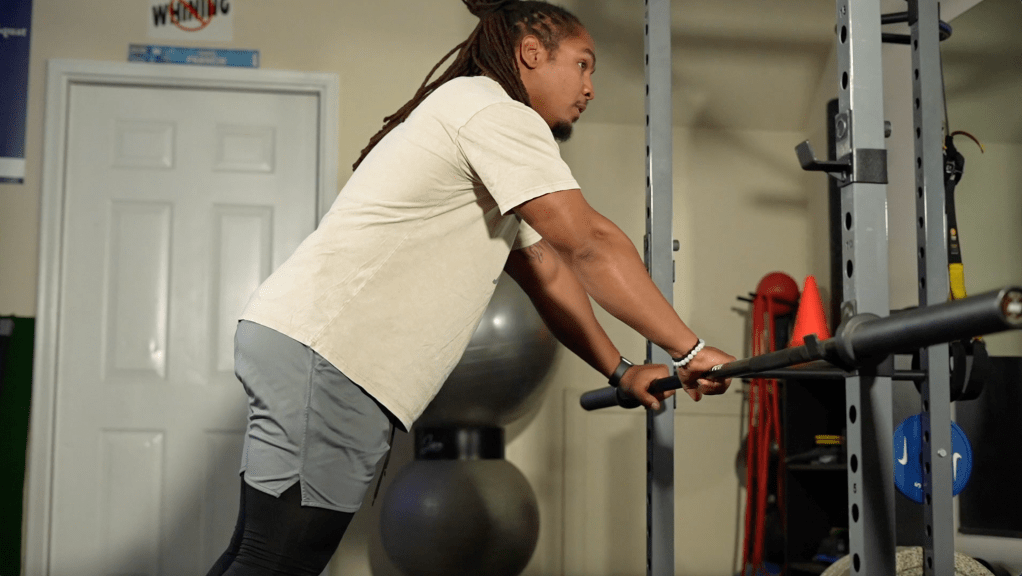
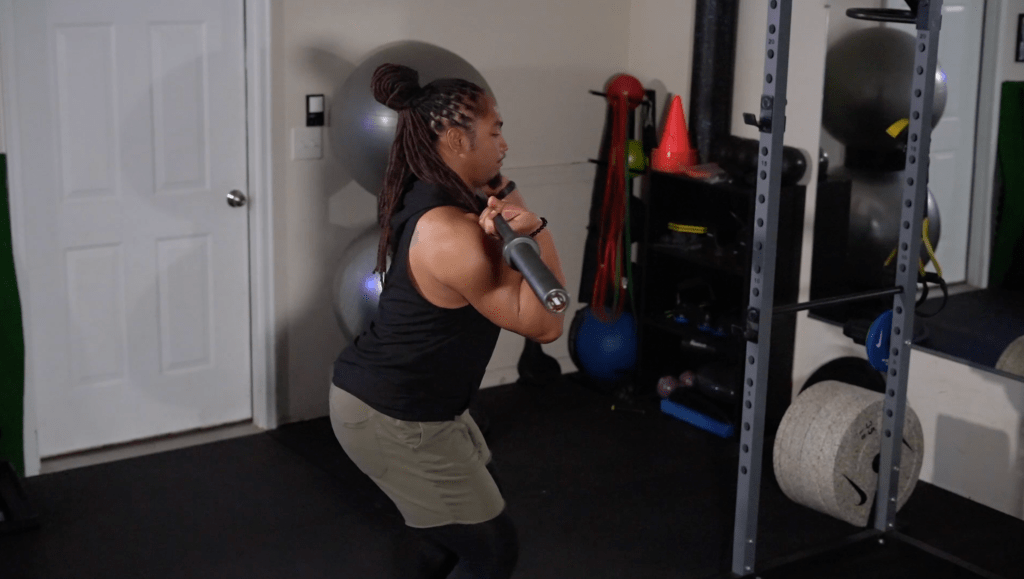
Golf Swing Range of Motion: Place a dowel or a household object like a broomstick (or even a golf club) across your collarbone, then use your hands to hold in place. Make sure your elbows are pointing forward, then hinge forward at your waist as if you’re doing a golf swing. Rotate your torso as if you’re swinging a golf club. The goal is to get both ends of the dowel pointing at the floor.
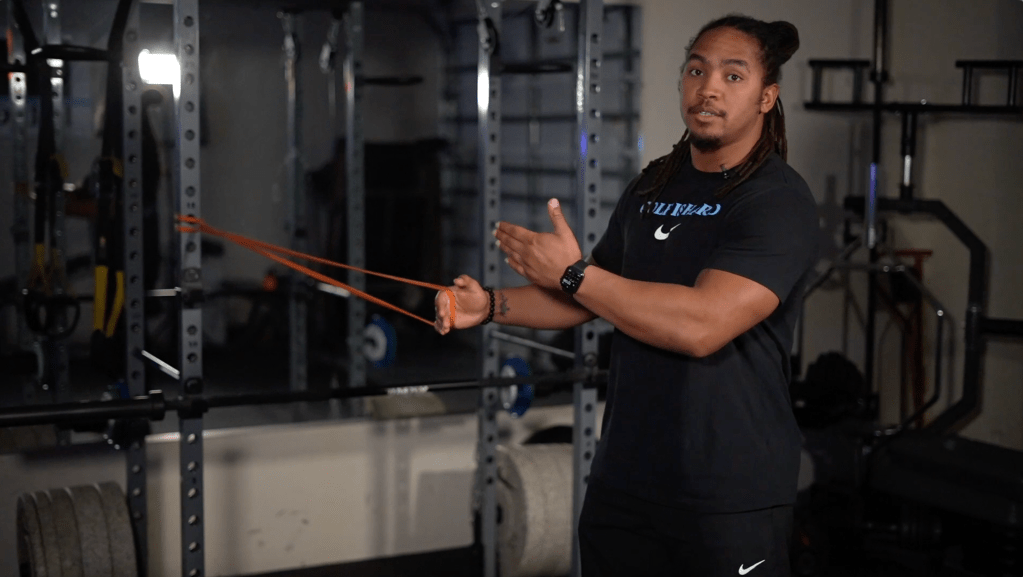
Torso Rotations (with exercise band): Tie the exercise band to a surface at approximately shoulder height. Hold onto the band with both hands and keep the arms locked out with your arms out in front of you. This will keep the tension in your core. Squeeze and rotate the torso while keeping your hips pointing forward.
Torso Rotation Stretch (with exercise band): Tie the exercise band to a post, then thread the needle by placing one arm through the band. Rotate your body the same direction so the band becomes hooked on your shoulder. Keep rotating so that the band is now across your back. Take a knee on the side of your body where the shoulder is through the band. Cross your arms on your chest and rotate away, then towards. Make sure you are upright and have your chest out. When you rotate, make sure you’re rotating to the point where your shoulders are parallel to your legs.
Make sure you do all exercises on both sides so you’re improving strength, mobility, and range of motion equally.
Why Thoracic Rotation is Important
Improving your thoracic rotation makes daily movements easier and increases your mobility by reducing strain on the spine and shoulder. It also improves posture and breathing mechanics, and can result in better athletic performance.
Daily activities that are impacted by thoracic rotation include things like looking over your shoulder while driving or reaching into the back seat to grab something, vacuuming, sweeping, certain types of yard work, lifting objects, and anything else that requires reaching and twisting motions.
If you’re focused on strength training and flexibility, or taking classes like yoga or pilates, improved thoracic rotation can help your workouts become more efficient.
Athletes who play golf, tennis, baseball, softball, or other rotational sports should also focus on their thoracic rotation.
Signs You May Have Weak Thoracic Rotation
Here are some signs that point to weakness in thoracic rotation:
- Stiffness, tightness, or a reduced range of motion when twisting or turning
- Pain in the lower back or shoulders
- Poor posture
- Forward head positioning
People who sit for long periods of time or have poor posture are more likely to suffer from poor thoracic rotation. This can also be caused by muscle imbalances, joint restrictions, previous injuries, or lack of flexibility.
Need Help?
Uno’s Fitness helps people of all abilities and ages overcome challenges like weak thoracic rotation. This helps our clients regain range of motion, reduce pain, and have more efficient workouts.
Contact us today to set up your free consultation and let us help you reach your health and fitness goals.





Leave a comment