
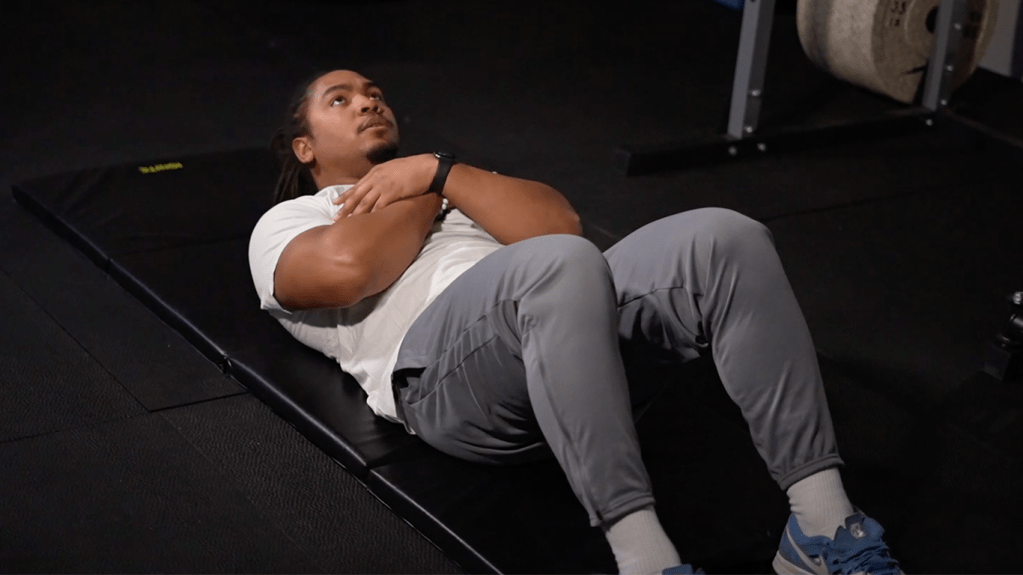
When many people think about their core, the upper core is what they often picture.
The upper core includes the Rectus Abdominis, the upper portion of the abdomen that makes the “six-pack” muscles. These muscles might look good, but they’re important because they are responsible for flexing the spine.
The upper core also includes the Transverse Abdominis, which helps stabilize the spine, and is also influenced by the External and Internal Oblique muscles, which help with rotation and lateral flexion.
Upper core muscles are critical for posture, stability, and mobility. They also play a critical role in many of the day-to-day activities people regularly perform.
Uno’s Fitness believes your core is so important that we incorporate core exercises into every single workout session.
Exercises For Your Upper Core
There are many exercises you can do for your upper core, but here are some of our favorites:
- Crunches: Lie on your back with your knees bent and your feet flat on the floor. Place your hands across your chest or behind you head, then lift your shoulders off the ground while engaging your core. Your slower back should not leave the ground. Crunches work the six-pack muscles, but your obliques will also work to stabilize you during this exercise.
- High Crunches: Start in the same position as a normal crunch, but instead of leaving your feet on the ground, bend your knees at 90 degrees and lift your feet off the ground. Hold your hands out above your head and do a crunch, reaching up and not forward. This is going to work the six-pack muscles in a more significant way than a normal crunch. Your obliques will also work to stabilize you during this exercise.
- Toe Touches: Lie on your back and extend your legs straight up in the air. Hold your arms out above your head and point towards your toes. Lift your upper body up to reach towards your toes while engaging your core. The six-pack muscles are the primary muscles engaged during this exercise, but you will also get deep core engagement from the transverse abdominis and your hip flexors will bet some work while holding your legs up in the air.
Be sure you are engaging your core throughout each of these exercises. Increase the intensity of the workout and the number of reps gradually, and use different types of core exercises to prevent overuse.
Why Your Upper Core is Important
Your upper core plays a key role in many of your day-to-day functions.
- Helps with stability and balance by stabilizing the body during movement. A stable core prevents your body from straining other joints and muscle groups.
- A strong upper core supports natural curves in the spine and promotes good posture. This can help prevent back and neck pain, which is common in people who sit for long periods of time.
- Increasing core strength can help prevent injuries, such as lower back injuries. This is especially true when lifting heavy objects or making sudden movements.
- Your upper core is responsible for movements you do every day, such as bending, twisting, and reaching.
- Core muscles have a role to play in how effectively you are able to breathe.
- Athletes benefit from a stronger upper core because of its role in rotational power and explosive movements.
Symptoms of a Weak Upper Core
If you have weak upper core muscles, you may notice some symptoms, such as:
- Poor posture: Weak upper core muscles can lead to slouching, hunching over, rounded shoulders, and forward head posture.
- Lower back & neck pain: Extra strain is placed on these areas of the body when you have a weak upper core, causing pain.
- Difficulty with daily activities: If you struggle bending, twisting, or reaching, or if you have trouble staying balanced during daily movements, your upper core may be weak.
- Quick fatigue: If you struggle to maintain correct posture when standing for an extended period of time, or if you notice quick muscle fatigue while performing core exercises, you may need to spend time focusing on your upper core.
- Coordination and balance problems: Struggling to stay balanced with single-leg movements or other exercises can indicate a weak upper core. This can lead to an increased risk of falling.
- Struggling to lift objects: A weak upper core can lead to struggles carrying objects, such as lifting boxes or bringing groceries into the house. Holding weight overhead with discomfort can also be an indicator of a weak upper core.





Leave a reply to Advanced Core Exercises to Further Your Core Strength – Uno's Fitness | Personal Training in Raleigh, Cary, NC Cancel reply